Sustainable Engineering

Conscious planning. Realize sustainably.

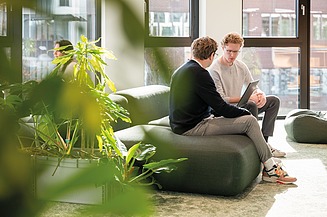
Two employees discuss sustainable engineering topics. © Daniel Wanders/STRABAG

Sustainably networked

With Sustainable Engineering, we combine precise planning, digital methods and sustainable strategies. This results in energy-optimized, resource-saving and value-enhancing solutions that make buildings fit for the future.

In Central Technology (ZT), we bring people, ideas and technologies together. Together, our sustainable solutions make an important contribution to the STRABAG Group's goal of becoming climate-neutral by 2040. Because the future is teamwork.

Sustainable engineering in ZT

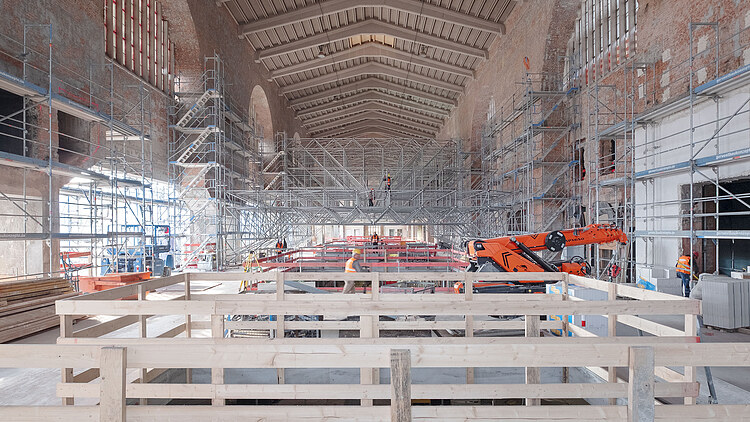
For us as an engineering office, sustainable engineering means: technology with responsibility. With Bauen im Bestand, our Green Services and MOLENO®, we create the basis for a sustainable future in central engineering.

Your advantages at a glance

Why sustainable engineering not only protects the environment, but also offers economic benefits and practical added value.

  • Conserving resources and protecting the climate: Through sustainable planning and construction, we reduce material consumption and cut emissions.
  • Economic efficiency and value enhancement: Sustainable planning increases the service life of buildings, improves the quality of life and reduces operating costs.
  • Innovation and responsibility: With sustainable approaches and holistic strategies, we create solutions that combine ecological, economic and social aspects.
  • Sustainable engineering means creating solutions today that will last tomorrow - for people, the environment and the future.

    Benedikt Zeisner
    Team leader for existing buildings

Sustainable Engineering - FAQ

  • What does sustainable engineering mean?

    For us at Central Engineering, sustainable engineering means developing and implementing sustainable solutions. Our aim is to conserve resources, reduce emissions and consider the entire building life cycle through sustainable planning and sustainable construction.

    The picture shows people from the Sustainable Building Group sitting in a nice office and looking at a tablet together © Daniel Wanders/STRABAG

    Sustainable engineering combines the art of engineering with responsibility for the future. Our core principles are as follows:

    • Holistic planning: We consider the entire life cycle of a project across all service phases. In doing so, we focus both on the construction of existing buildings and the sustainable construction of new buildings. For us, the renovation and modernization of existing buildings is an important lever for sustainability. Our experts have a new perspective on existing structures and will make your building shine in new splendor.
    • Conserving resources and energy efficiency: sustainability begins with the choice of materials and extends to the optimization of energy flows. We rely on resource-conserving materials, efficient systems and intelligent building technology.
    • Innovation and digitalization: Sustainable and smart engineering go hand in hand for us. For us, digital planning methods such as BIM, generative design and GIS are not only drivers for efficient and precise planning, but also for sustainability. Together, we create solutions that are ecologically responsible, economically viable and technically future-proof.
  • What does the future of sustainable planning and construction look like?

    The requirements for buildings are changing rapidly: climate neutrality, resource conservation and digital networking are no longer trends, but key guidelines for the construction industry.

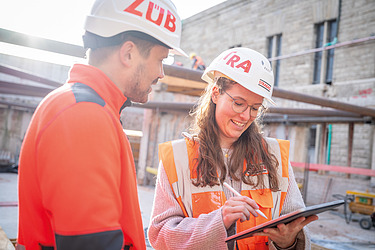
    The picture shows a person standing in front of a green façade and checking the façade with a tablet © Daniel Wanders/STRABAG

    Those who plan sustainably today shape the standards of tomorrow.

    • Holistic life cycle approach: The focus is no longer on sustainable construction alone, but on optimization over the entire life cycle. The circular economy is becoming the norm. Materials are reused and dismantling concepts are an integral part of all planning.
    • Sustainable engineering and smart engineering are merging: digital methods such as BIM enable holistic planning. Intelligent building technology controls energy and resources efficiently. Networked systems and artificial intelligence ensure real-time optimization and predictive maintenance. This results in solutions that are technically excellent, sustainable and future-proof.
    • Preservation instead of demolition: The renovation and modernization of existing buildings is becoming increasingly important. This allows materials to be saved, energy consumption to be reduced and the service life of buildings to be extended.
    • Focus on energy efficiency: buildings are increasingly becoming energy self-sufficient, equipped with photovoltaics, heat pumps and intelligent storage systems. Carbon footprints and certifications such as DGNB or LEED are becoming the standard and are a prerequisite for sustainable projects.